


The bill as we know is the official document that certifies our gas and electricity withdrawals from the distribution network.
Let’s see what information is useful to understand our consumption and related costs that we can read from gas and electricity bills.
Reading the electricity bill
The electricity travels to our homes via electric cables to the delivery point (“Point Of Delivery” – POD) to which is associated a unique code that identifies our. The POD is connected to a meter that measures the electricity consumption of our home. Electricity is measured in kWh (kilowatt hours).
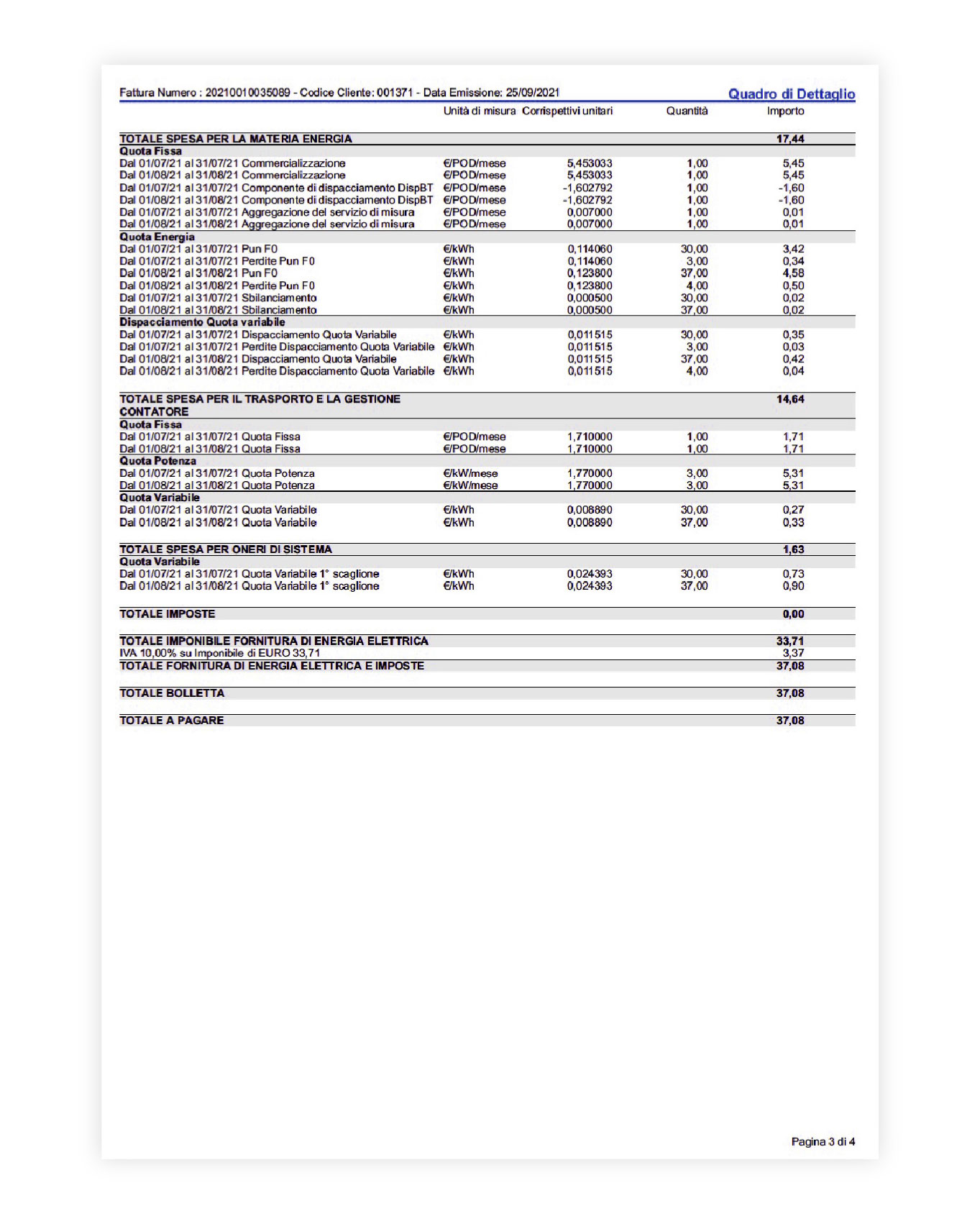
In general the costs for the use of electric energy are composed of a part related to the consumption (variable) of the energy material, which depends therefore on how many kWh we consume, and other parts due to the costs (fixed and variable) of transporting electricity to our homes and the costs of managing the electrical system.
Specifically we can find the expenses of:
Matter energy
The price can be updated quarterly and consists of:
- a fixed fee (euros/year)
- an energy fee (euros/kWh)
Transportation and Meter Management
The rate may vary quarterly and is composed of:
- a fixed fee (euros/year)
- a power quota (euros/kW/year)
- an energy fee (euros/kWh)
System charges
Tariffs may vary in correspondence with the need to cover charges; they are usually reviewed quarterly and for residential customers consist of:
- a fixed fee (euros/year)
- an energy fee (euros/kWh)
What some specific items on the energy bill mean
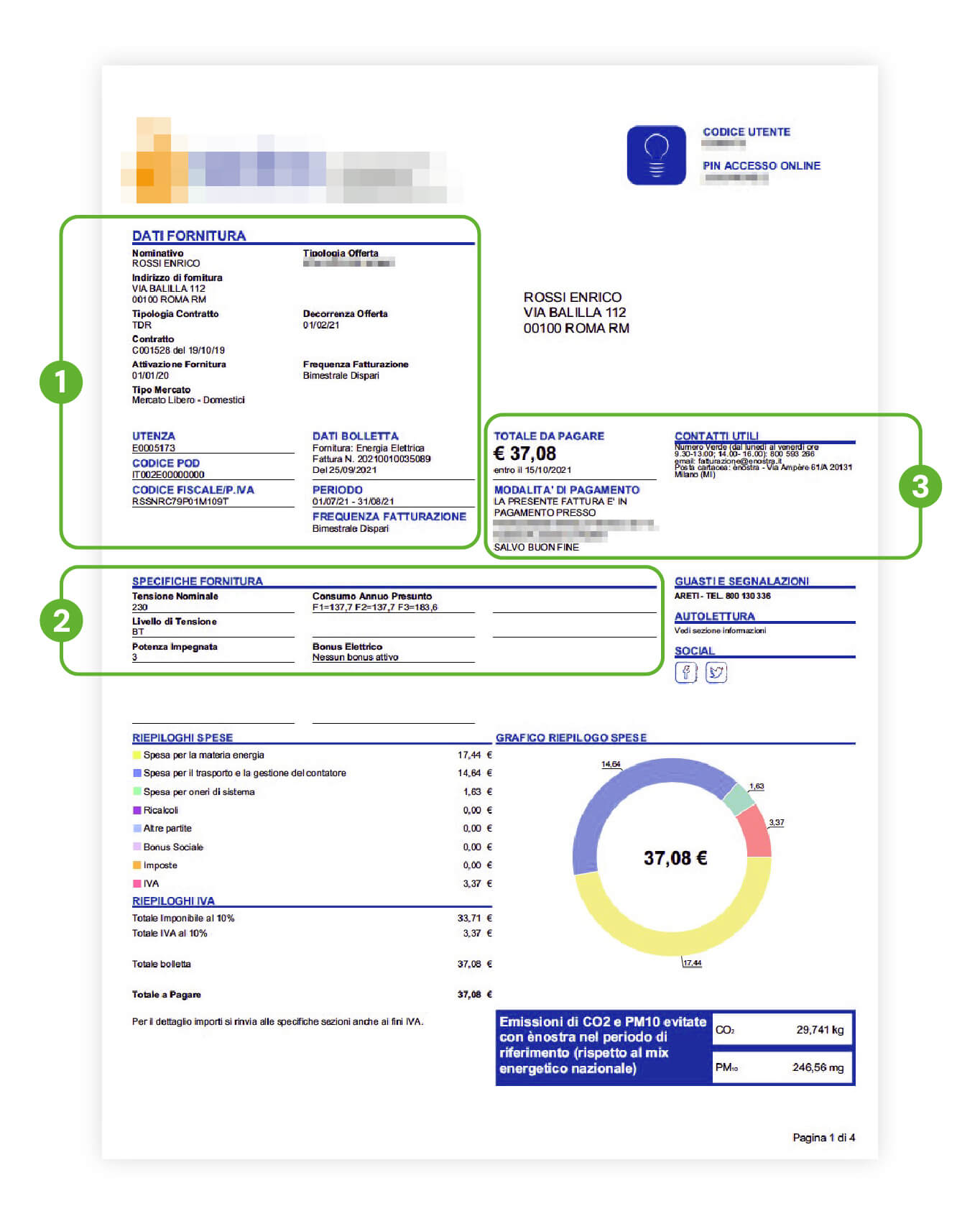
Supply data
- Name, tax code: these are the data that identify the contract holder.
- POD code and supply address: these are the data that distinguish the physical point where energy supply takes place.
- Contract type: resident domestic TDR.
- Contract: identification number of the signed contract.
- Supply activation date: the date from which the supply starts under the terms of the contract.
- Market type: Free market.
- Type of offer: type of tariff applied to the contract.
- Offer effective date: date from which the tariff is applied.
- Billing frequency: how often the bill for energy consumption is issued. For domestic contracts, the billing frequency is bimonthly.
- Bill data: this is the data that identifies the bill: the sequence number, the date of issuance, and the reporting period.
Supply specifications
- Technical characteristics of the supply: this is the information regarding the technical characteristics of the supply that affect the rates charged: the committed power, the maximum level of power
drawn, the rated voltage, the voltage level. - Annual consumption: is the consumption for 12 months of supply obtained from the customer’s previous consumption information.
- Social bonus: is only present in bills where the social bonus (or a share of it) is recognized.
Payment information
- Payment method: Indicates the payment methods available to the customer in accordance with the terms of the contract.
- Total to be paid: Indicates the amount to be paid and the deadline for making payment.
- Useful contacts: These are the contact details for contacting the electricity seller for information.
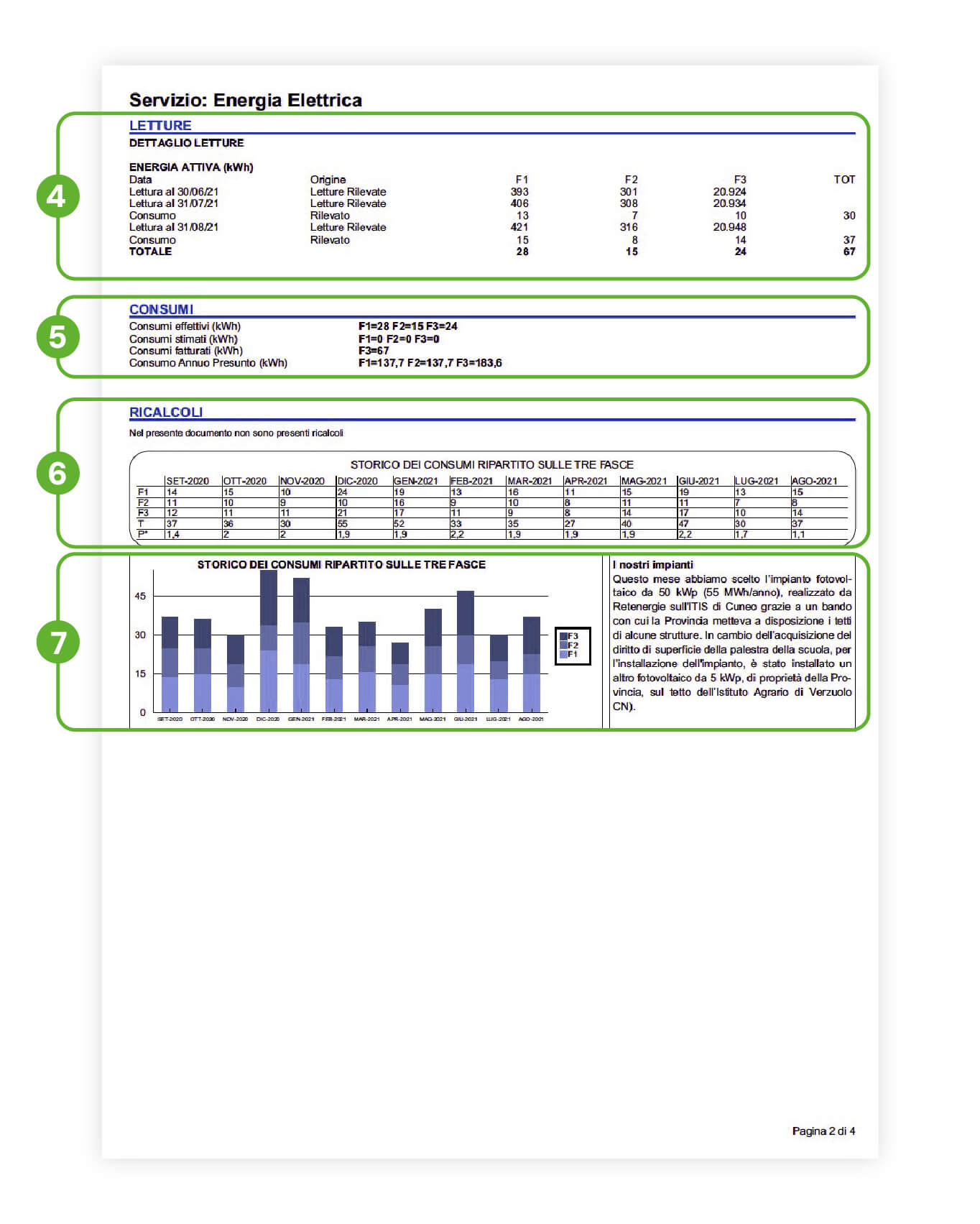
Data on readings
This section shows all data recorded by the meter that have been read by the distributor (readings taken) or reported by the customer (self readings) or estimated data (estimated readings).
Energy consumption, obtained as the difference between data from two successive readings, is also shown. Billed consumption can include both actual consumption and estimated consumption.
Data on consumption
If amounts paid in previous bills for consumption that had been estimated are returned in the bill, the bill indicates the period and consumption that had been estimated and the amount already paid for this consumption, which is returned.
The amount returned is already counted, to the customer’s credit, in the total amount to be paid and in the amounts indicated in the summary of expense items, under “RECALCULATIONS.”
Data on recalculations
The recalculations section is present only if amounts already billed in previous bills are recalculated in the bill.
Consumption history broken down over the three bands
It details consumption trends and the maximum monthly peak power drawn over the past 12 months, and allows customers to monitor and evaluate their consumption.
Finally, the costs of the variable and fixed components are detailed as described above:
Reading the gas bill
Natural gas comes to our homes through pipes that reach a redelivery point (PDR) with a unique code associated with our utility. Associated with the PDR is a meter that measures cubic meters(mc or m 3i) of natural gas that we take from the grid for our heat needs.
The structure of the gas bill has the same information and articulation as the costs of the electricity bill. Metered values are shown in cubic meters instead of kWh, ad also for gas the cost of supply is composed of a variable cost based on consumption and fixed costs due to transportation charges and system charges.